Industrial Water Softening & Filtration
Deploying advanced ion exchange and ultrafiltration technologies to prevent equipment scaling and ensure process reliability across commercial and industrial facilities.
Combatting Hard Water
Hard water is the enemy of industrial efficiency. Our robust Water Softening and Filtration Plants are designed to effectively remove calcium, magnesium, and suspended micron particles before they can damage critical infrastructure.
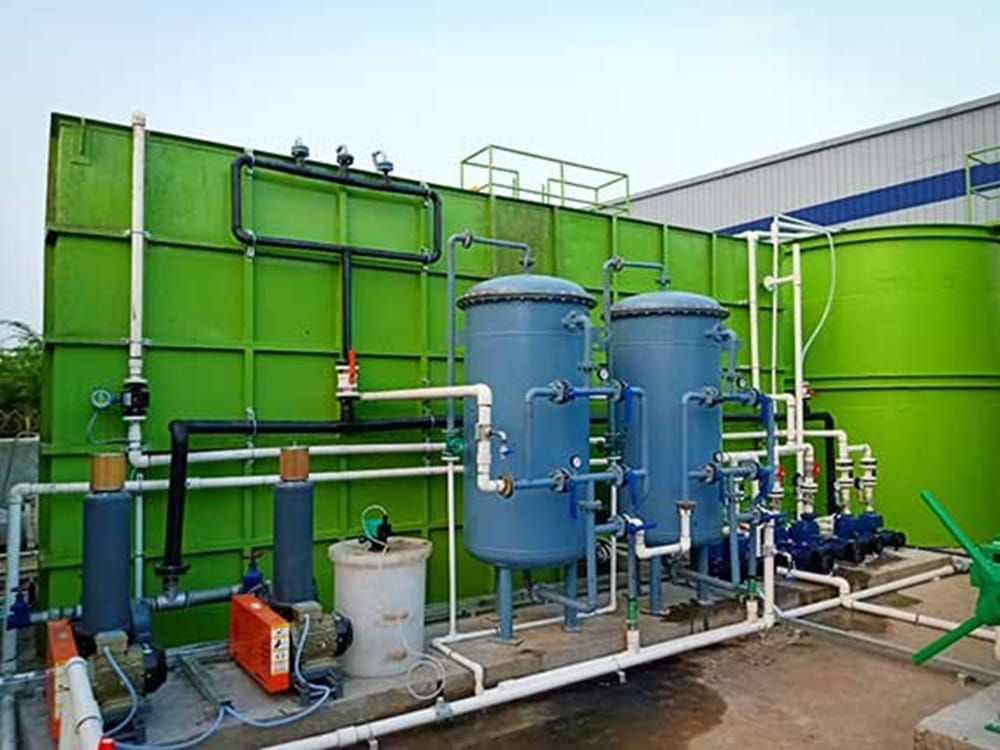
- High-capacity Ion Exchange Resin technology for deep softening.
- Multi-Grade Sand Filters (MGF) and Activated Carbon Filters (ACF).
- Ultrafiltration (UF) Membranes for sub-micron particle removal.
- Fully automated multi-port valves for seamless regeneration.
Protecting Your Assets
Scaling can rapidly destroy boilers, heat exchangers, and cooling towers, leading to catastrophic downtime. Our softening systems act as the primary defense line, extending equipment lifespan and maintaining thermal efficiency.
- Significantly reduces energy consumption by preventing scale buildup on heating elements.
- Minimizes chemical cleaning requirements and associated downtime.
- FRP or Epoxy-coated Carbon Steel tanks resistant to highly corrosive brine.
- Time or volume-based automated brine regeneration sequences.
Industries Served
We install softening and filtration solutions wherever hard water threatens operational efficiency and product quality.
Boilers & Cooling Towers
Preventing calcification to maintain peak thermodynamic efficiency.
Laundries & Hospitality
Reducing detergent consumption and protecting linens and washing equipment.
Residential Complexes
Protecting domestic plumbing, geysers, and providing superior bathing water.
Food & Beverage
Ensuring zero hardness for recipe consistency and processing equipment safety.
The Softening Process
1. Hardness Profiling
Testing raw water to calculate total hardness (Calcium and Magnesium levels).
2. Pre-Filtration
Removing suspended solids via MGF to prevent physical fouling of the resin bed.
3. Ion Exchange
Passing water through Sodium-based Cation resin, exchanging hardness ions for soft Sodium ions.
4. Continuous Delivery
Supplying soft water (hardness < 5 ppm) directly to the industrial process.
5. Resin Exhaustion
Automated sensors detect when the resin bed is saturated with hardness ions.
6. Brine Regeneration
Flushing the bed with a concentrated NaCl (salt) solution to recharge the resin for the next cycle.
Typical Softener Specifications
| Parameter | Feed Water Condition | Treated Water Standard |
|---|---|---|
| Total Hardness (as CaCO3) | Up to 1000+ ppm | < 5 ppm (Commercial Zero) |
| Resin Type | - | Strong Acid Cation (Food Grade available) |
| Regeneration Mode | - | Co-Current / Counter-Current |
| Valve Automation | Manual | Fully Automatic Multi-Port Valve (Fleck / Autotrol equivalent) |
| Operating Pressure | - | 2.0 to 3.5 kg/cm² |